The ceiling fan spins in a silent, hypnotic loop. Outside the window, the night is draped in a heavy, blue-black stillness, completely undisturbed by the usual daylight hum of traffic or the chime of incoming notifications.
You adjust the cool side of your pillow, pull the blanket over your shoulders, and look at the digital clock on the table. It reads exactly 3:14 AM. You have been awake for forty minutes.

The 3am Brain: Why Your Mind Races When the World Goes Quiet — A visual anchor in the quiet stillness.
Your body is leaden with physical fatigue, virtually begging for unconsciousness, yet your brain has apparently scheduled a full board meeting. The agenda is as diverse as it is unhelpful.
Topics for discussion: a clumsy phrase you used in a conversation back in 2019, tomorrow's relentless to-do list, a sudden anxiety about a minor physical ache, and whether you remembered to lock the front door.
There is a distinct, cruel irony in this midnight wakefulness. During the day, when you actually need your focus to be sharp and your cognitive machinery to run at full power, you feel sluggish and easily distracted.
Yet here, in the dead of night, in a room designed exclusively for quietude and sleep, your mind is suddenly capable of astonishing, high-resolution memory recall and highly complex, catastrophic planning.
You are not experiencing a personal failure or a psychological breakdown. What is happening under your skull is a predictable, highly orchestrated biological cascade.
The Brain Doesn't Know It's Nighttime
To understand the midnight race, you have to look at the chemical clockwork running beneath the surface. The popular narrative suggests that cortisol is merely a panic chemical—a biological alarm that only fires during direct threats.
In reality, cortisol is a highly sophisticated metabolic regulator. It follows a strict, twenty-four-hour cycle known as the diurnal rhythm, which dictates your alertness, immune function, and energy deployment.
Under normal, undisturbed conditions, your cortisol levels are programmed to hit their absolute lowest point around midnight. This drop allows your body to sink into deep, restorative slow-wave sleep.
From that low point, cortisol levels slowly begin to climb. It acts as a quiet, biological alarm clock that gently prepares your cardiovascular and metabolic systems for the effort of waking up.
In a natural, ancestral cycle, this hormone reaches its peak shortly after the sun rises, providing the focus and physical readiness needed to begin the day's activities.
But the Hypothalamic-Pituitary-Adrenal (HPA) axis—the master control system for your stress response—does not read the clock on the wall. It reads the signals you feed it throughout the day.
If you spend your evening scanning stressful news headlines, replying to late-night work messages, or worrying about unresolved deadlines, your amygdala registers these inputs as active survival threats.
This persistent cognitive friction triggers a slow, steady release of corticotropin-releasing hormone. In turn, this keeps your nighttime cortisol levels artificially elevated, refusing the deep drop required for rest.
Take a breath. You're still here.
Your nervous system remains on low-level alert, hovering just above the threshold of wakefulness. The slightest shift in your sleep cycle snaps you wide awake, your heart beating slightly too fast.
Modern screens compound this hormonal confusion. By emitting high-intensity blue light, our devices directly suppress the pineal gland's production of melatonin—the hormone that signals the arrival of darkness.
When you stare at a screen in the evening, you are essentially telling your brain that the sun is still high. The natural cortisol curve is warped, leading to a sudden, artificial awakening hours later.
The Default Mode Network Clocks In
For the vast majority of your waking hours, your brain is engaged in what neuroscientists call the Task-Positive Network. This network activates when you are actively focusing on the external world.
Whether you are writing a report, navigating a busy street, or cooking a meal, this system anchors your attention outside your own skull, leaving very little room for internal chatter.
When you turn off the light, close your eyes, and remove all external inputs, the Task-Positive Network goes dark. In its place, the Default Mode Network automatically clocks in.
The Default Mode Network is the brain's internal writer. It is responsible for daydreaming, self-reflection, autobiographical memory, social comparison, and projecting hypothetical scenarios into the future.
In our evolutionary history, the activation of this network during quiet periods was a natural, low-decibel process. But the modern digital age has fundamentally altered our relationship with quiet.
We have created an environment where we almost never experience stillness. From the moment we wake up, we fill every ten-second gap with podcasts, social feeds, and notifications.
This constant influx of digital noise acts like a dam, holding back the network's natural need to process and file away your thoughts. The brain simply accumulates unresolved cognitive clutter.
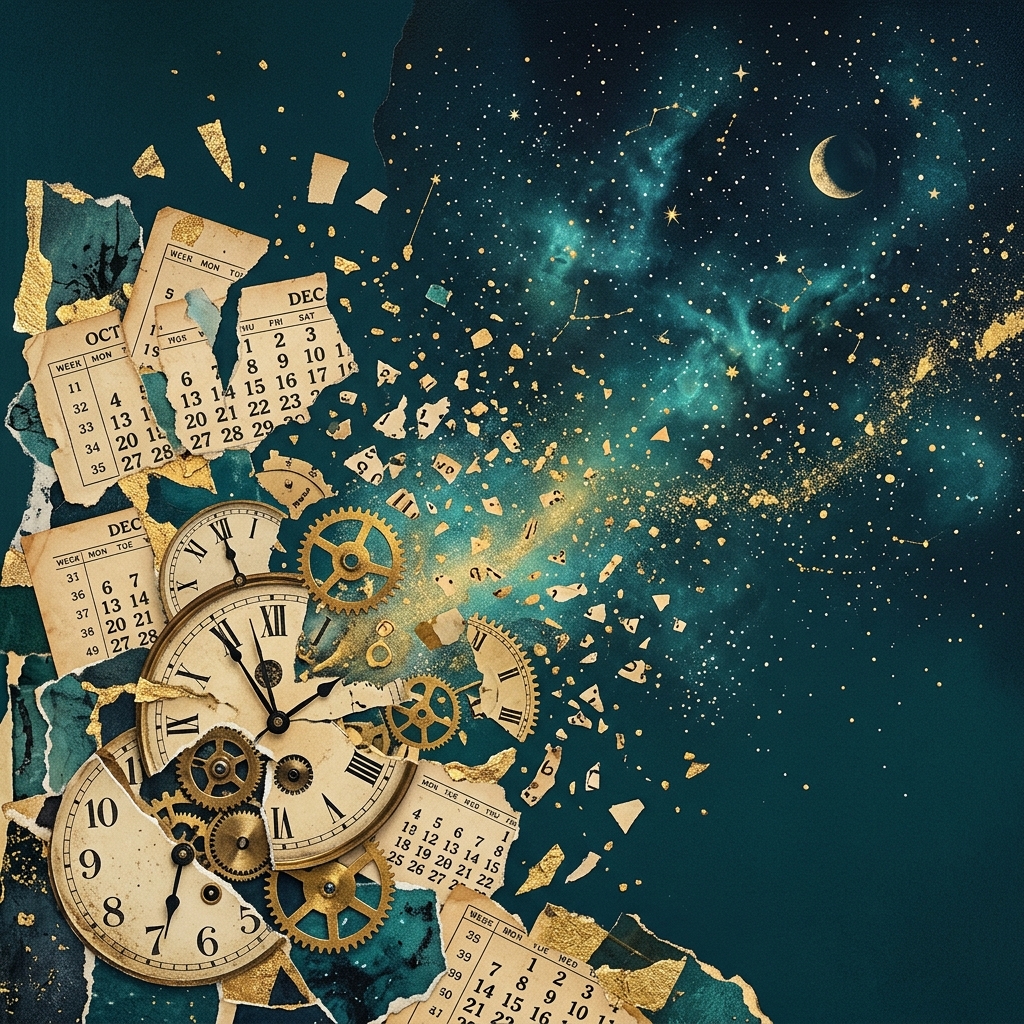
When you finally turn off the lights and lay in the dark, the dam breaks. The sudden silence of the bedroom is not just quiet; it is an absolute sensory vacuum.
The Default Mode Network rushes in to fill this empty space with immense energy. It begins running through all the unprocessed data, emotional residue, and social friction of the preceding twelve hours.
Because you never gave your mind a single minute of quiet during the sunlit hours, it has no choice but to do its heavy housekeeping in the dead of night.
Why Your Brain Picks the Worst Memories
As you lay awake, you might notice that your mind rarely drafts beautiful, peaceful thoughts at 3 AM. Instead, it seems to have an uncanny ability to surface your most embarrassing, painful, or highly anxious memories.
This is not a sign that your mind is broken. It is the direct result of how human memory is structurally consolidated and prioritized under the influence of elevated nighttime hormones.
During the night, your brain is engaged in a complex process of memory consolidation. It moves information from the temporary storage of the hippocampus to the permanent filing cabinet of the cortex.
In this sorting process, the brain does not treat all memories equally. It systematically prioritizes emotional memories—specifically those associated with fear, shame, social rejection, or unresolved anxiety.
From an evolutionary perspective, remembering a pleasant compliment was far less important than remembering a critical mistake or a moment of social exclusion.
Social exclusion in our ancestral past meant exile from the tribe, which was a literal death sentence. The amygdala tags these emotionally painful memories with a chemical highlighter to keep you safe.
Let your shoulders drop. There is nothing to do right now.
The brain surfaces these high-priority survival files so you can analyze them and avoid repeating the mistake. It is an automated safety protocol that operates without your conscious consent.
This process is made worse because your brain is operating without the structural support of the prefrontal cortex—the logical, rational region that keeps perspective during the day.
During late-night wakefulness, the prefrontal cortex is heavily down-regulated. The rational filter is offline, making the surfaced memories feel incredibly raw, intense, and immediate.
Your brain is trying to perform emotional housekeeping, but it is doing so in the dark, without its most logical tools to tell you that the past cannot be changed.
The Doom Spiral Is a Feature, Not a Bug
The experience of midnight rumination often feels like a destructive, self-sabotaging spiral that serves no purpose. Yet, in the long history of human biology, this threat-scanning was a highly successful evolutionary feature.
You are the direct descendant of the humans who stayed awake in the dark, scanning the perimeter for danger. Your ancestors were the hyper-vigilant, the light sleepers, and the threat-scanners.
For early humans, the night was the most dangerous time of the day. Without the safety of light, they were highly vulnerable to predators, rival tribes, and environmental threats.
The humans who slept deeply and peacefully through the dark, completely unbothered by small sounds or internal worries, did not survive long enough to pass on their genetic material.
A racing mind at 3 AM was a biological defense mechanism. It kept your ancestors alert, keeping their blood pressure slightly elevated and their senses sharp so they could react instantly to danger.

The problem is that we have imported our ancient, evolutionary nervous systems into a world that is structurally safer but cognitively far more complex and demanding.
Today, there are no physical predators outside your bedroom window. Yet, the threat-scanning software is still running, searching for material to process in the silence.
In the absence of physical predators, your brain takes your modern, abstract worries—interest rates, work emails, climate change, or personal relationships—and treats them with survival-critical urgency.
The ancient survival software is running on modern, digital hardware. It misfires in the dark, translating abstract social anxieties into immediate, physical threats to your life.
What Your Nervous System Actually Needs at 3am
When you wake up at 3 AM and realize your mind is racing, your immediate, natural response is to resist. You check the time, calculate the hours left before your alarm, and demand that your brain shut down.
You try to force sleep through sheer willpower, turning over aggressively and squeezing your eyes shut. But this active resistance is, in itself, a powerful threat signal to your nervous system.
By fighting your thoughts and worrying about your lack of sleep, you trigger a fresh release of adrenaline and cortisol. You tell your HPA axis that you are in a conflict.
This keeps you in a state of high physiological arousal. The more you fight the wakefulness, the more wakeful you become. You cannot force your nervous system into calm through aggression.
Exhale completely. Let the noise fade away.
What your nervous system actually needs at 3 AM is a shift from active resistance to biological allowance. You must signal to your brain that the room is safe.
One of the fastest, most reliable ways to quiet the HPA axis is a physiological tool called the physiological sigh. This is a breathing pattern consisting of a double inhale followed by a long, slow exhale.
You take a deep breath through your nose, followed immediately by a quick, sharp top-off inhale to fully expand the lungs. Then, you release a slow, sighing exhale through your mouth.
The second, quick inhale re-inflates the tiny air sacs in your lungs, maximizing oxygen exchange. The long, slow exhale immediately slows your heart rate by engaging the vagus nerve.
This sends a direct, physical signal to your brain that there is no predator in the room. It bypasses the racing thoughts entirely, addressing the nervous system at the level of the body.
Instead of trying to suppress the thoughts, which only makes them rebound stronger, shift your attention to the heavy, physical sensations of your body against the mattress.
By treating the thoughts like distant background noise and focusing on tactile anchors, you downshift your nervous system from the sympathetic state to the parasympathetic state.
You stop trying to make yourself sleep, and instead create the quiet biological conditions that allow sleep to naturally reclaim you.
The next time you find yourself awake in the blue-black stillness of 3 AM, staring at the ceiling while your mind replays old conversations, try to stop the fight.
Your brain is not broken, and it is not attacking you. It is simply a highly sophisticated, evolutionary survival tool running an ancient, hyper-vigilant program in a quiet room.
The problem is not the quality of your mind. The problem is that we live in a world that never grants our minds a single moment of quiet during the day.
We force our nervous systems to do all their heavy processing when the lights finally go out and the world falls silent.
Be gentle with the midnight chatter. Give your body permission to simply hold still in the dark, resting your muscles even if your mind is still sorting the files.
In that quiet surrender, the hormonal spike will eventually recede, the race will slow, and the calm will return.