It is 6pm. You finished everything. The inbox is clear. The list is done. The meetings are over. You sit back and wait for the satisfaction to arrive.
It doesn't.
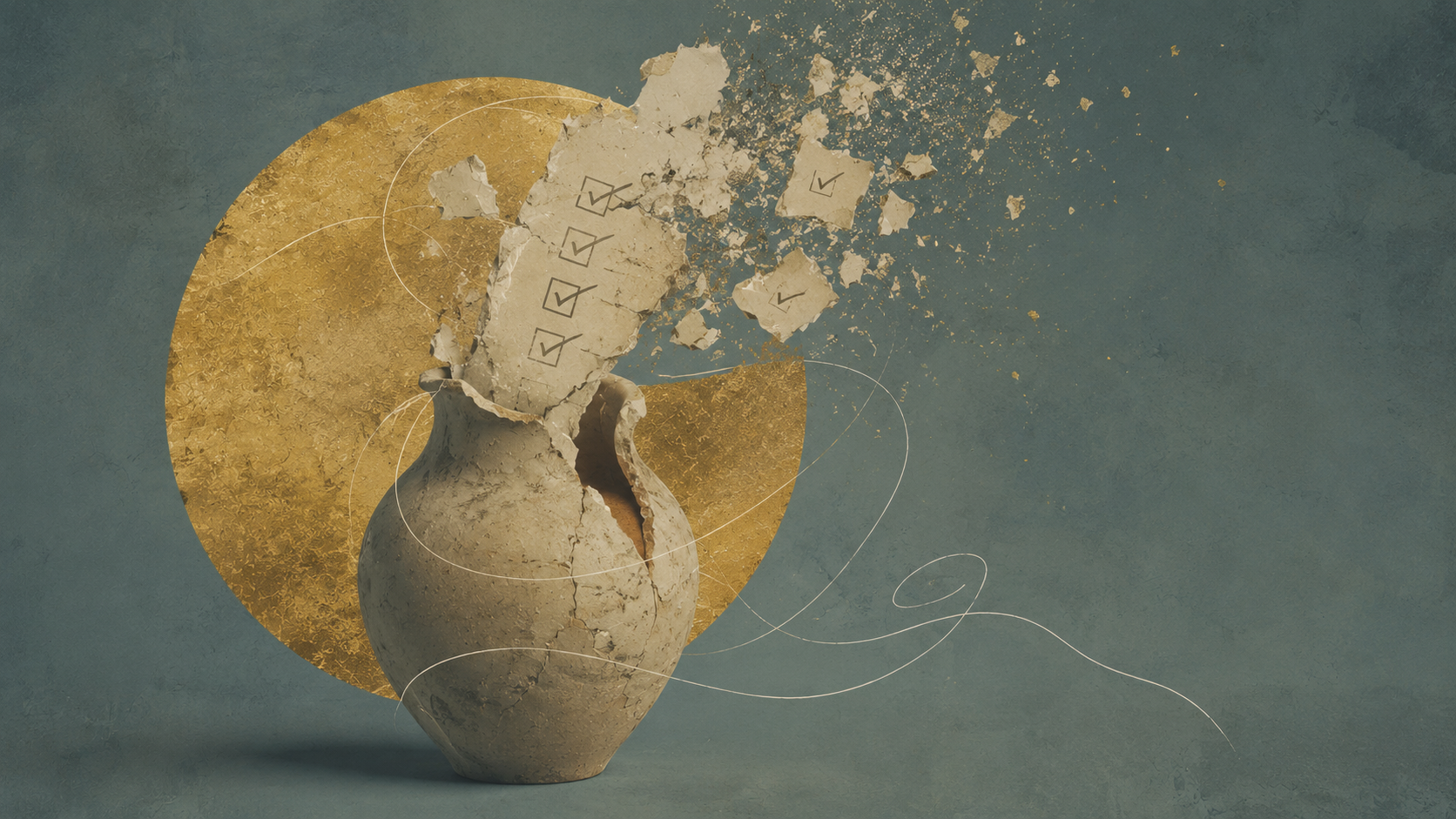
Why You Feel Empty After a Day of Perfect Productivity — A visual anchor in the quiet stillness.
Instead there is this strange hollow feeling. Like the day happened to someone else. Like you were so busy executing that you forgot to actually live inside any of it.
The Dopamine Trap of Task Completion
We have been sold a story that satisfaction lives at the finish line. In reality, your brain is a "seeking" machine, not a "finding" machine. Dopamine is the chemical of anticipation, not of reward. It is the fuel that powers the chase.
Take a breath. You're still here.
When you look at a long to-do list, your brain floods your system with dopamine to get you moving. It is high-octane motivation for the hunt. But the moment you cross off that final task, the tap is turned off.
The reward deflation happens almost instantly. The "catch" is never as exciting as the hunt. Crossing something off a list feels good for exactly four seconds because that is how long it takes for your brain to realize there is no longer anything to seek.
When Productivity Becomes Dissociation
There is a thin, dangerous line between "flow" and "autopilot." When you spend eight hours in a state of high-output execution, you are often performing a subtle form of emotional numbing.
To be that efficient, you have to silence the internal noise. You have to ignore the slight ache in your lower back, the thirst in your throat, and the emotional residue of a difficult conversation. You become a biological algorithm.
This is the neuroscience of execution mode. When the prefrontal cortex is hyper-focused on external outputs for too long, it begins to dissociate from the internal sensory experience. You are productive, but you are not present.

The Identity Problem With Being Productive
For many of us, productivity has ceased to be a tool and has become an identity. We have tied our fundamental sense of worth to our daily output. We don't feel like "good people" unless we have produced something tangible.
When your worth is tied to your output, a slow day feels like a character flaw. You use busyness as a coping mechanism for anxiety, filling every silence with a task so you don't have to face the quiet underneath.
Let your shoulders drop. There is nothing to do right now.
The emptiness you feel at 6pm is the sudden surfacing of that anxiety. When the busyness stops, you are left with a self that you haven't spoken to all day. You have moved through the day, but you have not built a life.
What Your Nervous System Is Actually Asking For
Accomplishment and meaning are not the same thing. You can accomplish forty tasks and find meaning in none of them. Your nervous system doesn't care about your inbox; it cares about context and connection.
The brain needs unstructured time—what neuroscientists call the Default Mode Network—to consolidate experience. This is the "background processing" where your brain makes sense of what happened to you.
If you never stop, you never process. Rest feels like failure to a high achiever because rest is the moment the "doing" self dies and the "being" self is forced to wake up. Your emptiness is a hunger for self-reflection.
The Day You Did Nothing and Felt Everything
Think back to the most memorable days of your life. They were rarely the ones where you cleared your inbox or optimized your workflow. They were likely the days of zero productivity—the long walks, the deep conversations, the wandering mind.
Exhale completely. Let the noise fade away.
There is a profound paradox in presence. The more you focus on "getting things done," the less you actually experience. Studies on unstructured time show that it leads to a richer emotional life and more creative breakthroughs.
The wandering mind is not a distracted mind; it is an emotional processing unit. When you allow yourself to do "nothing," you are giving your brain permission to do the most important work of all: feeling your own existence.
The emptiness after a productive day is not a sign that something is wrong with you.
It is your nervous system noticing that you were somewhere else all day. Present in tasks. Absent from yourself.
The checklist was completed. But you were not there to experience it.
That is not a productivity problem. That is a presence problem. And it is one of the most quietly common experiences of modern life.