Right now, somewhere on your computer, there are tabs you opened three days ago and never read. A recipe you will probably never cook. An article you saved for later that later never came. A flight you were thinking about booking. A Wikipedia rabbit hole you got pulled out of.
They are still open. And your brain knows.
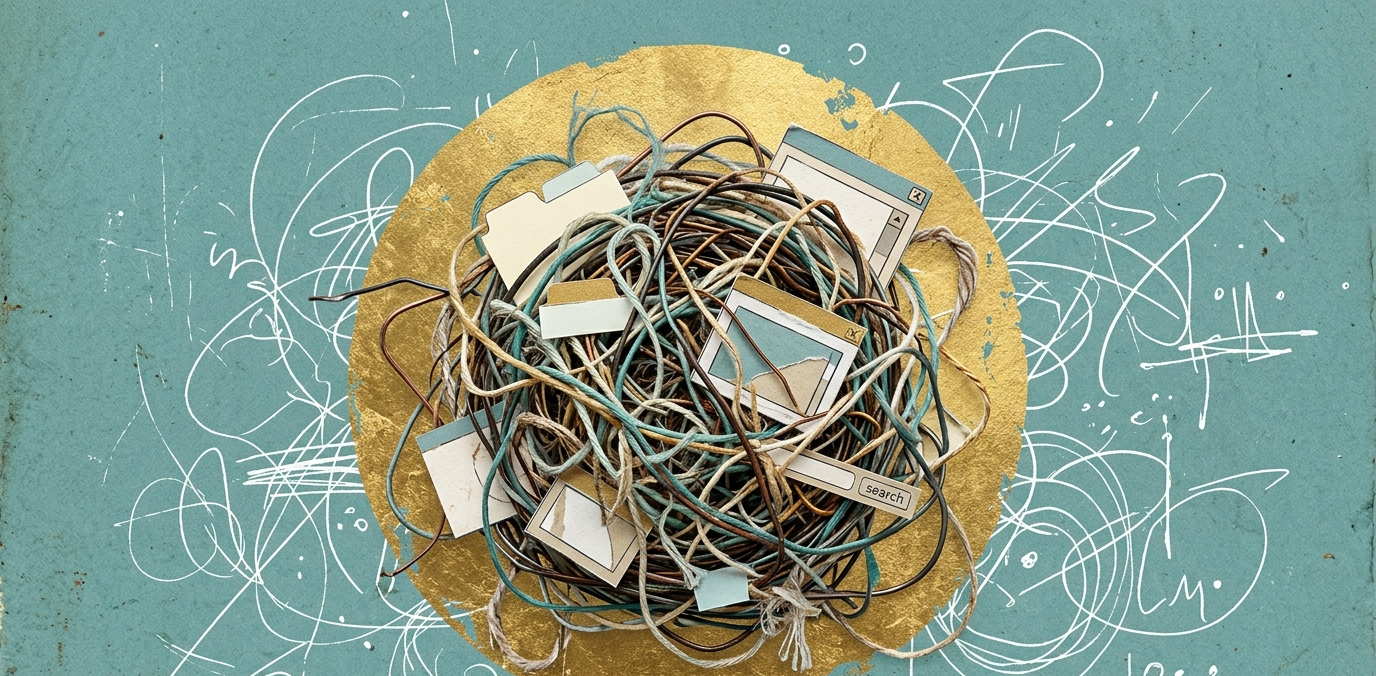
The Mental Load Nobody Talks About: Having Too Many Browser Tabs Open — A visual anchor in the quiet stillness.
Tabs as Cognitive Artifacts
Each open tab is a frozen intention. We think we are saving information, but neuroscience suggests we are actually archiving a version of ourselves—the version that wanted to bake sourdough or understand quantum entanglement.
The brain treats these digital objects as unfinished tasks. It is the Zeigarnik effect in high definition: a cognitive tension that persists because a loop remains open. Every favicon is a tiny, glowing reminder of a promise you haven't kept yet.
Take a breath. You're still here.
We carry these digital intentions like stones in a backpack. Individually, they are weightless. Collectively, they create a persistent mental hum that drains the battery of your focus long before the day is done.
The Illusion of Being Prepared
We keep tabs open out of a deep-seated fear of forgetting. It feels like a safety net, a way to stay on top of a world that moves too fast. If the tab is there, the knowledge is accessible. You are prepared.
But this is anxiety management disguised as productivity. We are not preparing; we are procrastinating on the decision to either engage or let go. The tab becomes a placeholder for a future action that rarely arrives.
The paradox of this digital preparation is that it rarely leads to actual movement. Instead, it creates a visual clutter that signals to your nervous system that you are perpetually behind.
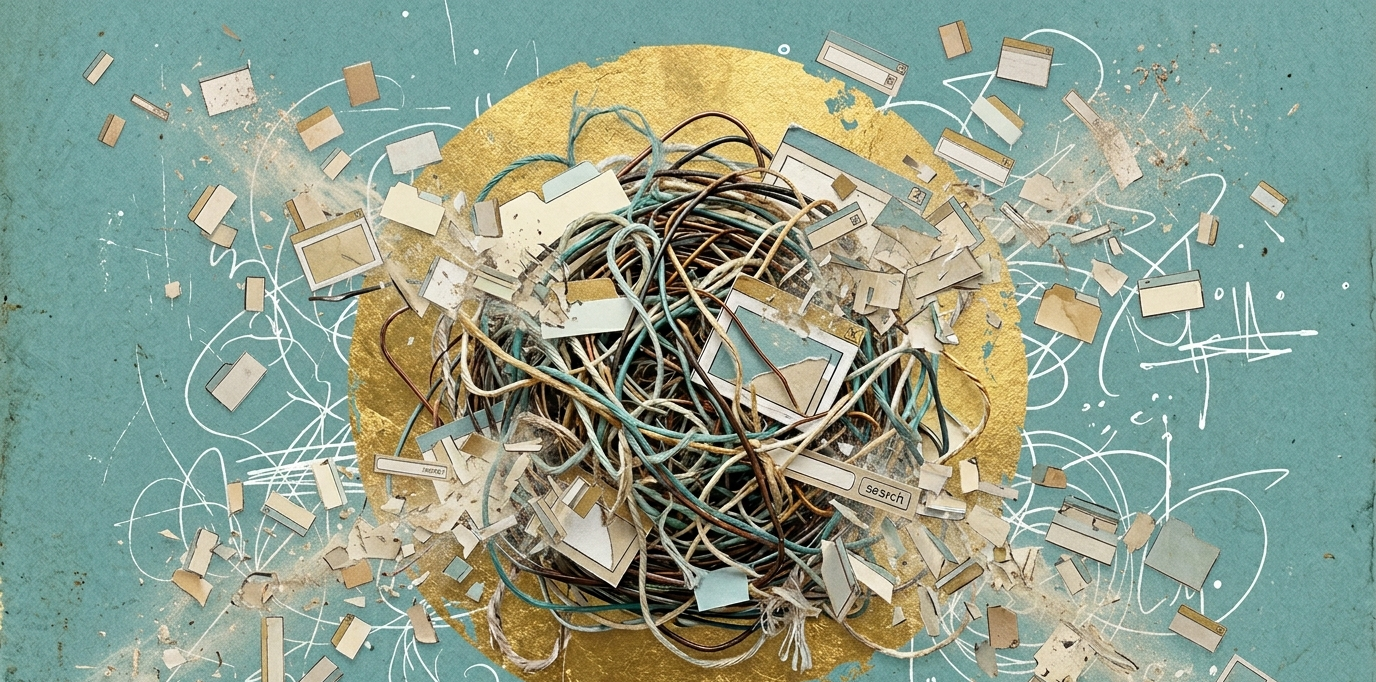
What Tab Overload Does to Your Working Memory
Human working memory is famously limited. We can hold about seven items in our immediate focus. When your browser header is a crowded graveyard of 47 unreadable icons, you are forcing your brain to process visual noise in the periphery.
Even when you aren't looking at them, your mind maintains a baseline awareness of their existence. It is like trying to have a conversation in a room where fifty people are whispering your name.
Let your shoulders drop. There is nothing to do right now.
This mental hum creates a cognitive load that saps your creative energy. You aren't just working; you are managing the environment in which you work. The browser, once a window to the world, becomes a mirror of your own overwhelm.
The Anxiety Architecture of the Modern Browser
Modern browsers were designed for infinite capacity, not human cognition. They don't have a "full" state. They will let you open tabs until the text disappears and only the icons remain, then until even the icons are crushed into oblivion.
This architecture exploits our loss aversion. Closing a tab feels like losing a thought, even if it was a thought you hadn't revisited in a week. We treat digital objects with the same biological weight as physical ones.
We are operating 21st-century tools with a Pleistocene brain that views a "lost" resource as a threat to survival. The browser doesn't help you prioritize; it only helps you accumulate.

The Strange Relief of Closing Everything
There is a specific, neurological reset that happens when you click 'Close Other Tabs.' It is a forced conclusion to a hundred minor open loops. Suddenly, the mental noise drops. The air in the room feels different.
Exhale completely. Let the noise fade away.
A fresh browser window feels like a deep breath because it is one. It represents a return to intentionality. You are no longer reacting to your past intentions; you are choosing what matters right now.
This isn't about productivity or minimalism. It is about recognizing the difference between saving a piece of information and actually acting upon it. The reset is a gift to your future self.
The tabs are not the problem.
The tabs are a map of your anxiety. Every one of them is something you wanted to do, somewhere you wanted to go, something you did not want to forget.
Closing them does not mean giving up on those things.
It means trusting yourself to remember what actually matters. And letting go of the rest.