You asked an AI to write the email. Then you asked it to summarize the report. Then to plan your week. Then to explain the thing you were too tired to Google.
At some point in the last year, thinking started to feel optional. And somehow that has made everything feel worse.
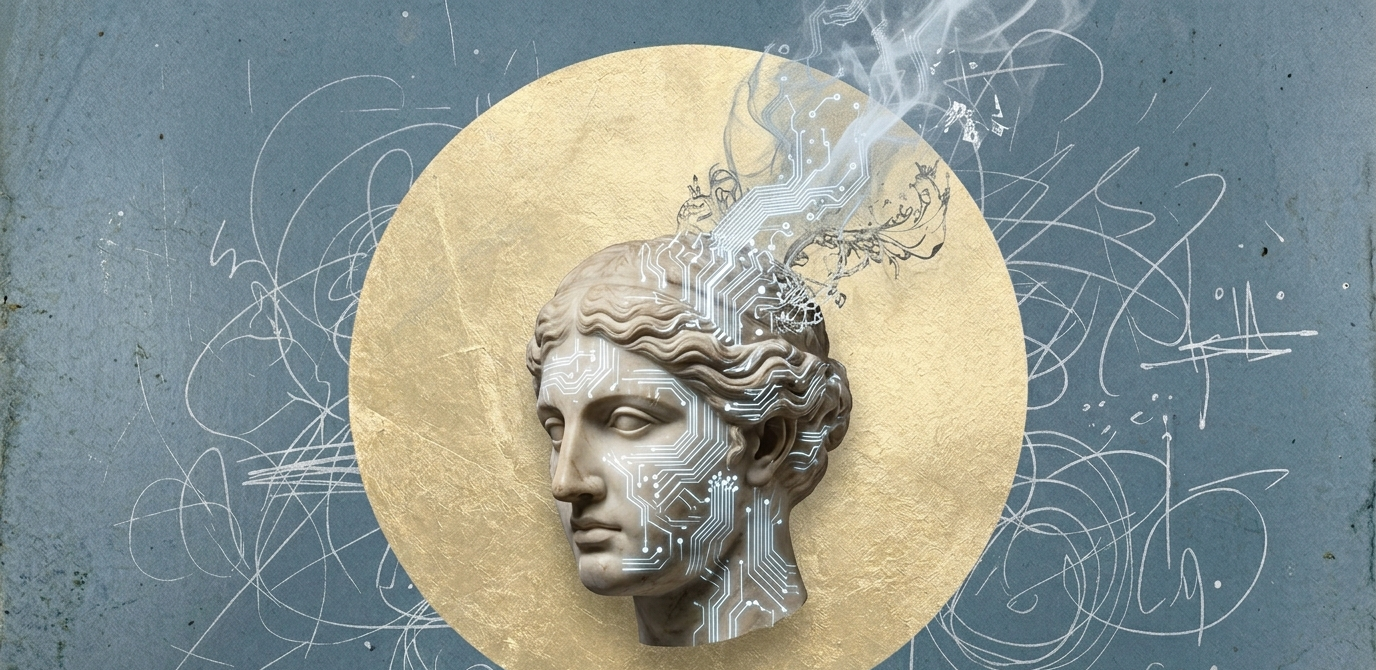
What AI Overload Is Doing to Your Nervous System in 2026 — A visual anchor in the quiet stillness.
The Outsourcing of Thought
Neurologically, problem-solving is a heavy-duty workout for the prefrontal cortex. When you outsource that struggle to an algorithm, you aren't just saving time. You are bypassing the very process that anchors your focus.
Cognitive offloading has its limits. The brain is an efficiency machine; if it doesn't need to exert effort to find an answer, it stops building the neural scaffolding required to understand it.
Take a breath. You're still here.
We thought AI would cure decision fatigue. Instead, it has created a new, deeper exhaustion. We are no longer making choices; we are merely auditing them, a passive state that leaves the nervous system unmoored and oddly jittery.
Your Brain Was Built to Struggle Productively
Neuroscience speaks of "desirable difficulty"—the idea that learning only happens when the mind is slightly uncomfortable. Friction is not a bug in human cognition; it is the mechanism by which memory is encoded.
Frictionless information feels unsatisfying because it triggers no dopamine release from discovery. We are consuming answers we didn't earn, leaving the brain in a state of permanent, low-level cognitive hunger.
Effortful thinking is also a form of emotional regulation. When we work through a complex problem, we are training our nervous system to handle frustration. Without the struggle, our threshold for mental stress begins to plummet.
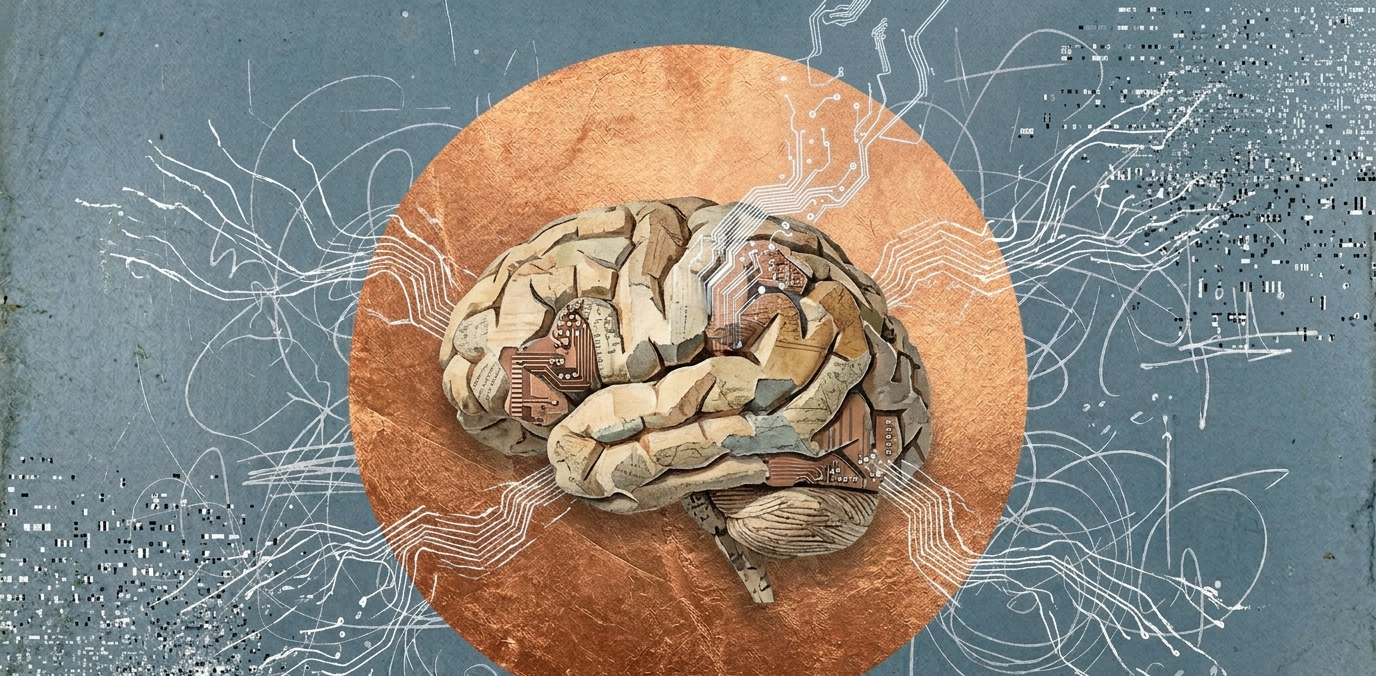
The New Anxiety: Not Knowing If You Can Still Think
There is a creeping, modern fear that our own thoughts are becoming slower and less useful. We look at the lightning-fast generation of a prompt and feel a sense of cognitive redundancy.
This is more than just imposter syndrome. It is a disruption of identity for knowledge workers. When the output is automated, the value of the process—the uniquely human synthesis of experience—starts to feel invisible.
Let your shoulders drop. There is nothing to do right now.
The nervous system registers this as a threat to survival. If the machine can think "better" and faster, where is the safety in our own intellect? We are living in a permanent state of quiet self-doubt.
Stimulus Velocity and the Overwhelmed Nervous System
We are currently operating at a stimulus velocity that exceeds our biological processing speed. AI generates content in seconds that takes the human nervous system minutes, or even hours, to truly metabolize.
This creates a backlog of unprocessed information. We are flooding our "information metabolism" with high-octane data, leading to elevated cortisol levels and a persistent state of cognitive overwhelm.
The brain feels flooded even when the content is objectively useful. It is the neurological equivalent of trying to drink from a firehose; eventually, you just stop being able to swallow.
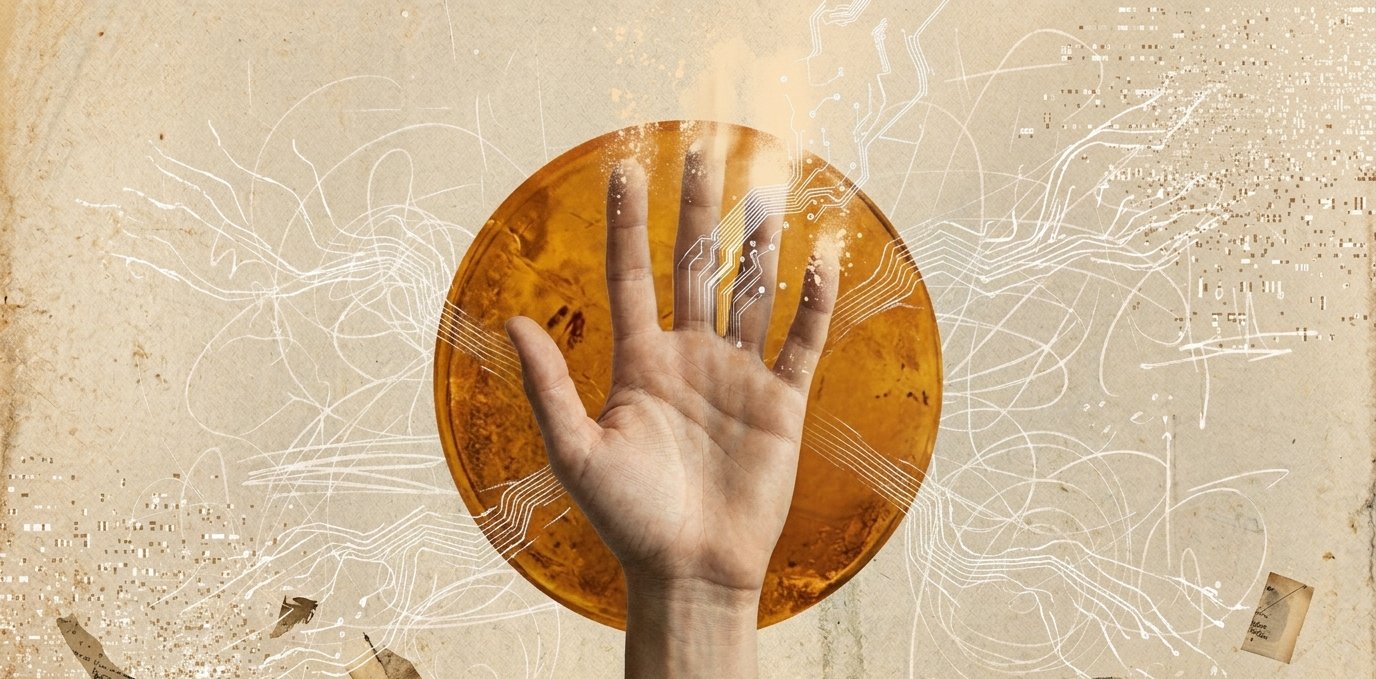
What Slow Thinking Actually Costs You — And Gives Back
Deliberate slow cognition—the kind that involves mind-wandering, dead ends, and quiet reflection—is where true insight is born. Research shows that our best ideas come when we are inefficient.
Exhale completely. Let the noise fade away.
Reclaiming cognitive agency isn't about rejecting the tools. It is about protecting the messiness of the human mind. It is about choosing to be slow in a world that demands we be fast.
When you allow yourself to think through a problem without assistance, you are giving your nervous system a chance to catch up. You are returning to a pace that feels biologically familiar.
The tools are not going away.
And this is not an argument against using them. But there is a version of your mind that exists before the prompt box. A version that is slower and messier and occasionally brilliant in ways that cannot be automated.
That version still needs exercise. Not because AI will replace it. But because it is the part of you that actually feels like you.